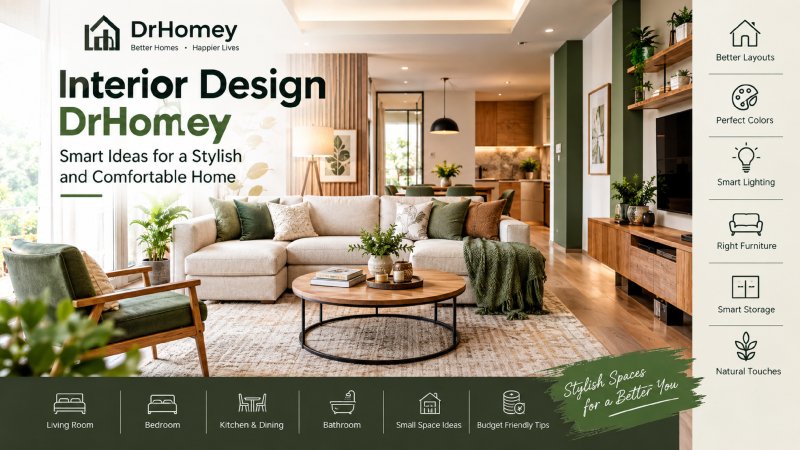
A beautiful home is not simply about expensive furniture, fashionable colors, or impressive decorations. Good interior design is about creating a space that feels comfortable, functions well, and reflects the people who live there. Interior Design DrHomey follows this practical idea by bringing together comfort, organization, visual balance, and personal style.
Whether you live in a small apartment or a spacious house, thoughtful design can make a noticeable difference. The right furniture arrangement can improve movement, better lighting can change the atmosphere of a room, and carefully selected colors can make a space feel calmer and more inviting.
The goal is not to make every room look like a showroom. Instead, the focus is on creating a home that looks attractive while remaining practical for everyday life. This guide explains the major principles, room-by-room ideas, color choices, furniture decisions, lighting techniques, and common mistakes to consider when applying this approach.
What Is Interior Design DrHomey?
Interior Design DrHomey can be understood as a balanced approach to home decoration that combines style with everyday comfort. Rather than concentrating on a single design trend, it encourages homeowners to think about how a room will actually be used.
A well-designed space should allow people to move comfortably, find things easily, relax when they want to, and perform everyday activities without unnecessary obstacles.
This approach generally places importance on:
- Comfortable and appropriately sized furniture
- Natural and layered lighting
- Calm, coordinated colors
- Useful storage
- Meaningful decoration
- Open and practical layouts
- Natural textures and materials
The result is a home that feels personal rather than overly decorated.
Core Principles of Interior Design DrHomey
1. Design for Real Life
Before buying anything, consider the purpose of the room. A family living room may need durable seating and accessible storage, while a bedroom should prioritize rest and privacy.
Design decisions become easier when function comes first. Ask yourself how people move through the room, where they usually sit, what needs to be stored, and which activities happen there most often.
2. Keep the Layout Comfortable
Even attractive furniture can make a room uncomfortable if it is positioned poorly. Leave enough open space around major furniture pieces so people can walk naturally.
Avoid blocking doors, windows, or frequently used pathways. In smaller rooms, multifunctional furniture can help maintain valuable floor space.
A useful principle is simple: every piece should earn its place.
3. Create Visual Balance
Balance does not mean that everything has to match. Instead, different elements should work together.
For example, a large sofa can be balanced with a substantial rug, artwork, or another visual element. Smaller accessories can then add detail without making the room feel crowded.
Balance can come from size, color, texture, shape, or placement.
Interior Design DrHomey Ideas for Different Rooms
Living Room
The living room is often the main social space in a home, so comfort should be a priority.
Start with the sofa and determine the best arrangement around it. A coffee table, side tables, rug, and lighting can then be added according to the available space.
Instead of placing every piece against the wall, consider whether a more open arrangement would improve conversation and movement.
Soft cushions, throws, artwork, and plants can add personality. However, decoration should support the room rather than overwhelm it.
For a smaller living room, choose furniture with a lighter visual appearance and consider pieces that provide hidden storage.
Bedroom
A bedroom should feel calm and uncluttered. Soft colors, comfortable bedding, suitable bedside lighting, and organized storage can create a more relaxing environment.
Avoid filling the room with unnecessary furniture. A bed, bedside tables, appropriate storage, and a few carefully selected decorative elements may be enough.
Curtains, rugs, bedding, and cushions can introduce texture without requiring major renovation.
If the bedroom receives natural light, avoid unnecessarily blocking the windows. Light-colored curtains can provide privacy while still allowing daylight into the room.
Kitchen and Dining Area
Kitchen design needs to balance appearance with efficiency. Frequently used items should be easy to reach, while less frequently used equipment can be stored away.
Countertops generally look cleaner when they are not overloaded with appliances and decorative objects.
For the dining area, choose a table and chairs that fit the room’s proportions. A table that is too large can restrict movement, while one that is too small may not meet the needs of the household.
Wood, stone, metal, and textured fabrics can introduce warmth and visual interest.
Bathroom
A bathroom does not need excessive decoration to feel attractive.
Neutral colors, good lighting, clean storage, and coordinated fixtures can create a simple and refreshing appearance. Shelves, baskets, and vanity storage can help keep everyday products organized.
Mirrors are particularly useful because they provide a functional purpose while also helping reflect light and create a greater sense of openness.
Choosing the Right Color Palette
Color can influence how a room looks and feels. Interior Design DrHomey works particularly well with coordinated palettes rather than random combinations of colors.
Warm whites, beige, soft gray, earthy browns, muted greens, and gentle blues can provide a calm foundation. Stronger colors can then be introduced through artwork, cushions, rugs, or smaller accessories.
One practical approach is the 60-30-10 principle:
- Around 60% of the room can use a dominant color.
- Around 30% can feature a secondary color.
- Around 10% can be reserved for accents.
This does not need to be followed as a strict mathematical rule. It is simply a useful way to prevent too many competing colors from appearing in the same room.
Also consider undertones. Two shades that look similar in a store can appear very different under natural and artificial lighting.
Lighting Can Transform a Room
Lighting is one of the most important parts of interior design because it affects both function and atmosphere.
Instead of relying on one ceiling fixture, consider three basic layers:
Ambient lighting provides general illumination.
Task lighting helps with activities such as reading, cooking, studying, or working.
Accent lighting highlights artwork, architectural features, plants, or decorative areas.
Natural light should also be considered during planning. Keep windows as open as practical and use curtains that provide privacy without unnecessarily darkening the room.
Warm lighting can create a comfortable evening atmosphere, while brighter task lighting can be useful in work areas.
Furniture: Choose Size Before Style
A common mistake is purchasing furniture because it looks attractive in a showroom without considering the dimensions of the actual room.
Before buying a sofa, bed, table, or cabinet, measure the available area. Think about doorways, walkways, windows, and other furniture.
Large furniture can make a small room feel restricted. On the other hand, furniture that is too small for a large room can make the space feel unfinished.
Multifunctional pieces can be particularly valuable. Storage ottomans, beds with drawers, extendable dining tables, and compact workstations can provide practical benefits without adding unnecessary furniture.
Add Texture Instead of More Decoration
A room does not need dozens of decorative objects to look interesting.
Texture can create depth without adding visual clutter. Consider combining materials such as:
- Linen
- Cotton
- Wool
- Wood
- Stone
- Metal
- Ceramic
- Glass
For example, a neutral sofa can become more interesting with a textured rug, woven basket, wooden table, and soft cushions.
This creates variety while keeping the overall color palette controlled.
Use Plants and Natural Elements
Plants can add color and softness to rooms dominated by hard surfaces.
A large plant can become a focal point in a living room, while smaller plants can work well on shelves, desks, or kitchen areas. Choose varieties that suit the available light and the amount of care you can realistically provide.
Natural wood, stone, woven materials, and ceramics can also introduce an organic quality.
The key is moderation. A few well-positioned natural elements can be more effective than filling every available surface.
Smart Ideas for Small Spaces
Small homes require careful planning, but limited space does not mean limited style.
Use furniture that serves more than one purpose whenever possible. Vertical storage can also make use of wall space without taking valuable floor area.
Mirrors can help reflect available light and create a stronger sense of openness. Light colors can also make a compact room feel visually larger, although darker accents can still be used strategically.
Keep pathways clear and avoid filling every corner. Empty space is useful because it gives the eye somewhere to rest.
How to Create a Stylish Home on a Budget
Good design does not always require a complete renovation.
Start with the changes that have the greatest visual impact. Rearranging furniture, improving lighting, removing unnecessary clutter, changing textiles, or updating small hardware can refresh a room without major expense.
Instead of purchasing many inexpensive decorative items, consider choosing fewer pieces that fit the space and serve a clear purpose.
You can also refresh existing furniture. A new finish, replacement handles, updated cushions, or a professionally repaired piece can sometimes change its appearance significantly.
The goal is not to spend more. It is to spend more intentionally.
Common Interior Design Mistakes to Avoid
Even a well-planned concept can lose its impact because of simple mistakes.
Overcrowding: Too much furniture and decoration can make a room feel smaller.
Ignoring proportions: Furniture should match the size of the room.
Using only one light source: A single ceiling light can create flat illumination and uncomfortable shadows.
Too many colors: Several unrelated colors can make a room feel visually chaotic.
Following every trend: Trends change quickly. A timeless foundation usually gives you more flexibility.
Ignoring storage: Beautiful rooms become difficult to maintain when everyday items have nowhere to go.
Decorating without purpose: Every object does not need to be displayed. Keep items that are useful, meaningful, or genuinely contribute to the room.
How to Apply Interior Design DrHomey Step by Step
You do not need to redesign your entire house at once.
Start with one room and follow a simple process.
First, remove unnecessary items and identify what is not working. Next, measure the room and consider how people use it. Then select a basic color palette and decide which furniture pieces should remain.
After that, improve the lighting and introduce useful storage. Add textiles and natural elements for warmth, followed by a small number of decorative pieces.
Finally, step back and evaluate the room as a whole. If something feels excessive, remove it rather than automatically adding something else.
This gradual approach makes interior design more manageable and can also help prevent unnecessary spending.
Frequently Asked Questions
1. What is Interior Design DrHomey?
Interior Design DrHomey is a practical approach to creating comfortable, organized, and visually appealing living spaces. It combines functionality, thoughtful layouts, suitable colors, lighting, furniture, and personal decoration.
2. Can Interior Design DrHomey work in a small apartment?
Yes. The principles can be adapted to smaller spaces by using appropriately sized furniture, multifunctional pieces, vertical storage, mirrors, and uncluttered layouts.
3. What colors work well with this interior design style?
Warm whites, beige, soft gray, earthy shades, muted greens, and soft blues can create a calm foundation. Accent colors can then be introduced through smaller decorative elements.
4. How can I improve my home interior without spending a lot?
Start with low-cost, high-impact changes such as decluttering, rearranging furniture, improving lighting, updating textiles, adding plants, or replacing small hardware.
5. What is the biggest interior design mistake to avoid?
One of the most common problems is overcrowding a room. Too much furniture or decoration can reduce movement, hide the room’s useful features, and make the space feel smaller.
Final Thought
Interior design works best when beauty and everyday living support each other. Interior Design DrHomey provides a useful framework for thinking about comfort, layout, lighting, color, furniture, storage, and personal expression as connected parts of one home.
You do not need to completely transform your property to make it feel better. Start with the room that needs the most attention, remove what does not serve a purpose, improve the layout, introduce better lighting, and add details that genuinely reflect your style. Click here for more information.
A successful interior is not simply one that looks impressive in photographs. It is a space that feels comfortable, functions naturally, and makes everyday life easier.